

Map the material
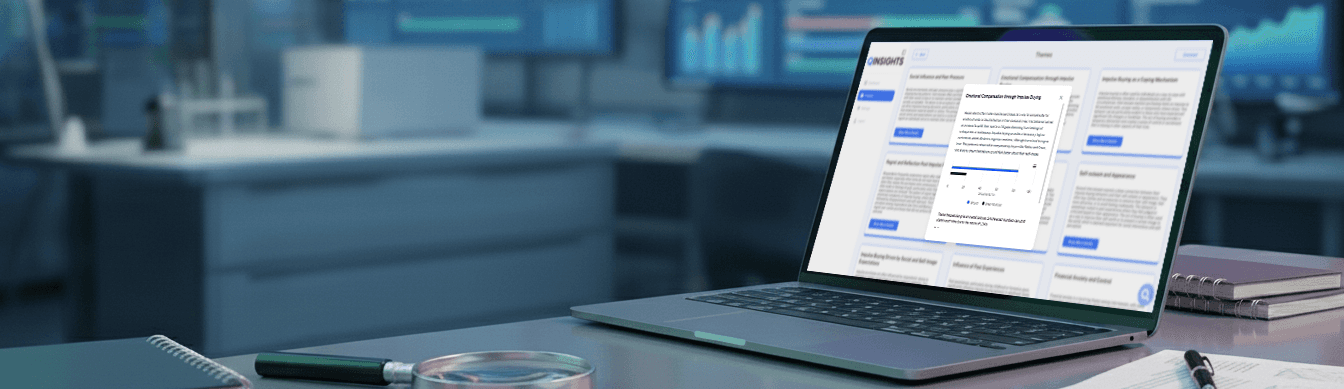
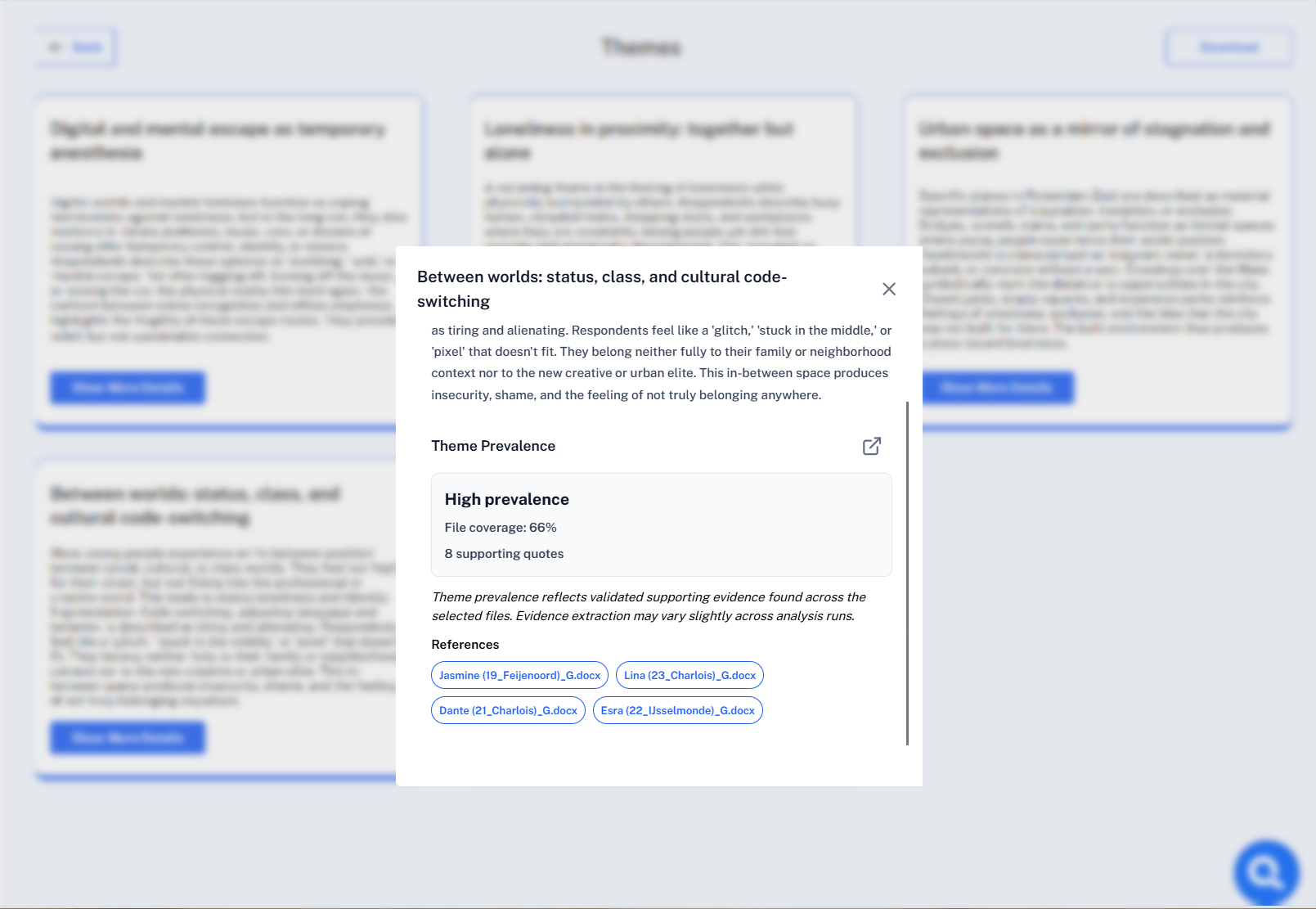
Begin with a structured overview of themes across the selected material. Open a theme to examine its description, prevalence, file coverage, sources, and supporting quotations. It gives you a place to start—not a finished analysis.
AI-assisted qualitative analysis
Explore interviews, reports, and open-ended responses. Compare perspectives, follow emerging questions, and keep every finding connected to the evidence.


Used by academic researchers, evaluation teams, consultants, and research organisations.
Researcher-led, AI-assisted
QInsights reduces the time spent searching, retrieving, and organising, so you can focus on patterns, contradictions, and context.
AI helps you process the material.You decide what it means.
Inside QInsights
Move between overview and detail, pursue the questions that matter, and retain a clear connection to the research material throughout.

Begin with a structured overview of themes across the selected material. Open a theme to examine its description, prevalence, file coverage, sources, and supporting quotations. It gives you a place to start—not a finished analysis.

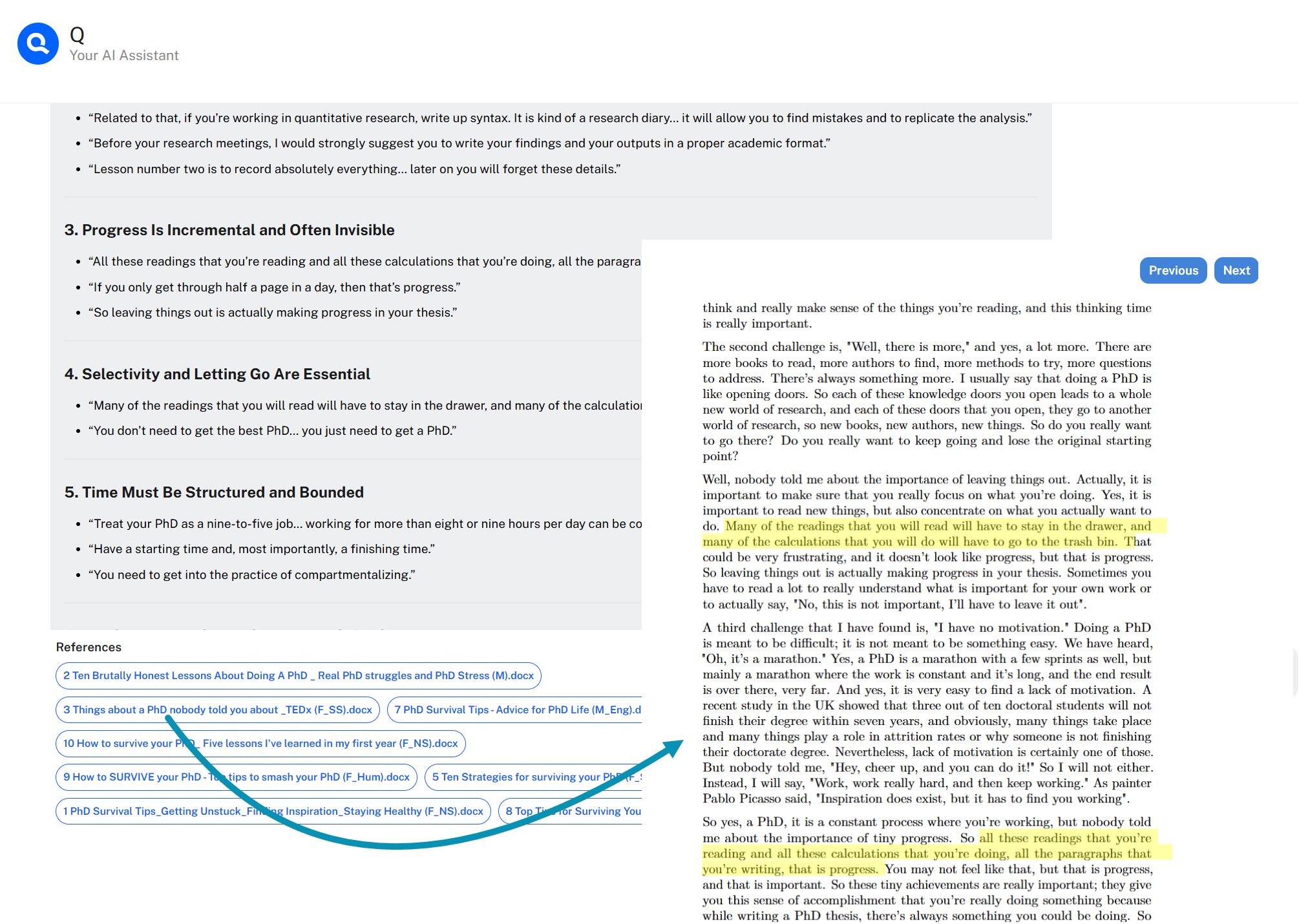
Qualitative analysis rarely follows a straight line. One answer raises another question; a contradiction needs closer inspection; an unexpected case changes the direction of the analysis. QInsights lets you continue that process through questions and follow-ups while keeping the conversation connected to your research material.

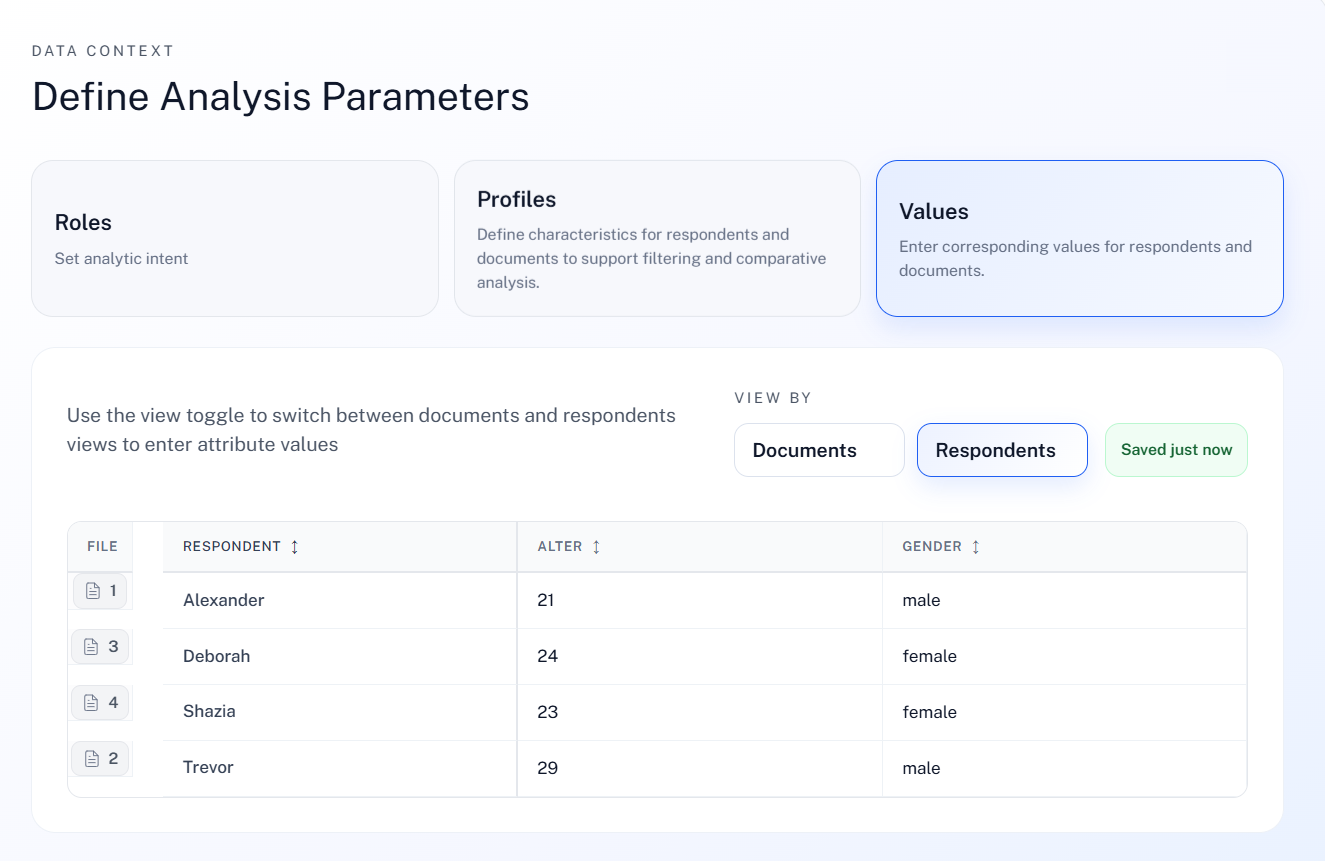
Add relevant context to respondents or documents—such as role, location, stakeholder group, or study wave. Use it to examine patterns, differences, and contradictions across groups without losing sight of the original material.

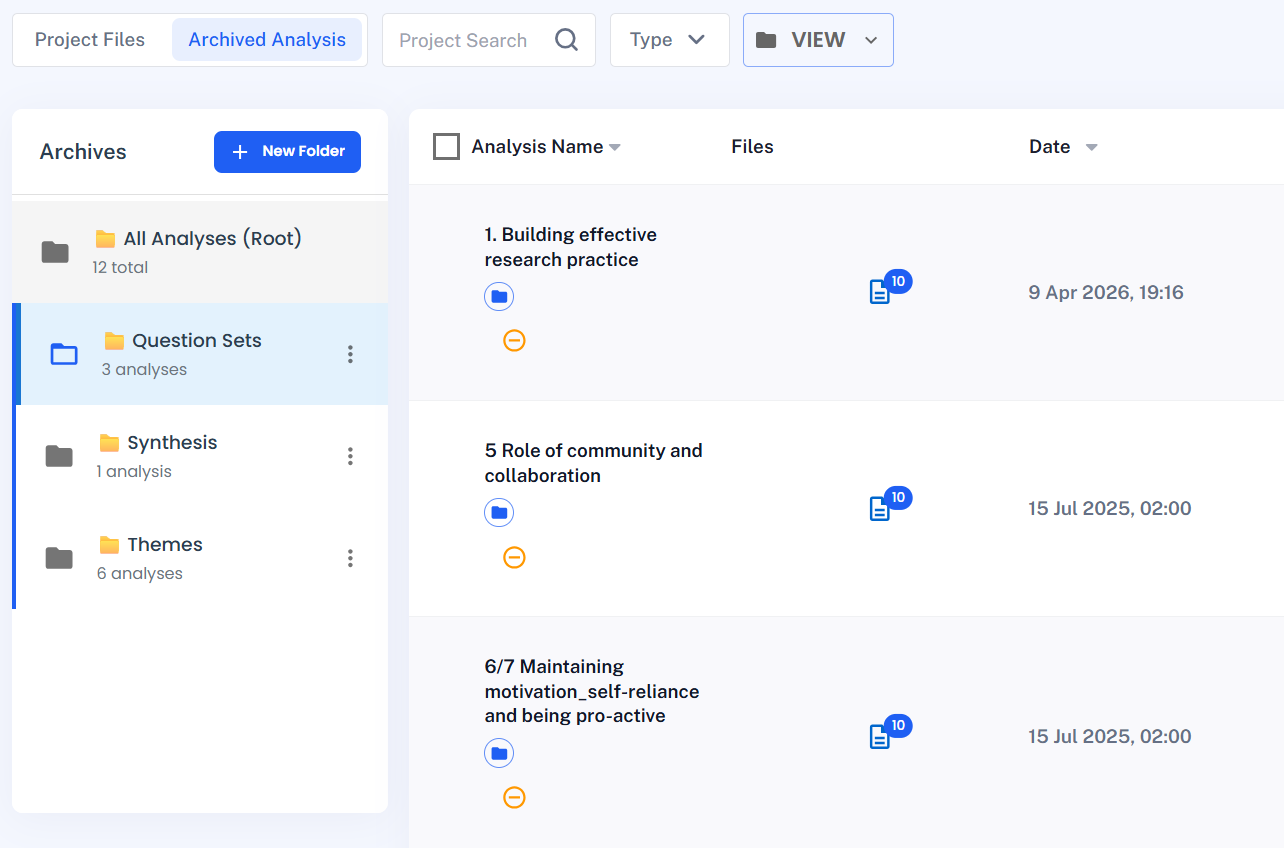
Save useful results in the Archive, organise them into folders, and return to earlier questions as the analysis develops. Individual analyses become a body of work that you can build on when preparing an article, thesis, or evaluation report.
QInsights supports different approaches to qualitative research without prescribing a single method or replacing the researcher’s judgement.
Work with interview and focus-group transcripts, open-ended responses, and documents. Develop questions, examine alternative readings, and maintain a traceable connection between interpretations and source material.
Analyse stakeholder interviews, programme documents, and feedback. Compare perspectives across groups, sites, or time periods and prepare findings that can withstand scrutiny.
Researcher experiences

“I think of it like a thought partner. It advanced my depth of thinking because I can have a conversation and talk through what I am thinking.”
Pamela Rothpletz-Puglia
Professor of Qualitative and Mixed Methods Research, Rutgers School of Health Professions
“QInsights supports us with impressive quality in analysing qualitative data, saving us a great deal of time. It is developed with strong user focus and offers excellent customer service.”

Dr Elisabeth Brackerdaponte
Cornelsen Verlag GmbH, Germany
“QInsights was able to identify the same themes that took me months to create in a fraction of the time. I am genuinely impressed by how much detail it preserves.”

Miguel Alejandro Saquimux Contreras
PhD Candidate, Health Sciences, UNICAMP
“It is like having a personal research assistant that understands the complexities of qualitative research and allows me to focus more attention on the creative and intuitive aspects of my work.”

Prof. Samantha Hurst
Public Health, UC San Diego
QInsights in use
Watch a short demonstration of how QInsights supports a qualitative analysis while keeping the researcher involved in the process.
Book a personal demoAllow external media to watch this YouTube video.
Privacy and control
QInsights is designed for work with sensitive qualitative data.
Data is processed within the European Union and handled in line with GDPR requirements.
Your uploaded material and analysis results are not used to train general-purpose AI models.
Research data is encrypted both while it is transferred and while it is stored.
Start with your own material
Use QInsights to explore your qualitative material while keeping questions, evidence, and interpretation connected.